The Operating System
For Modern Medicine
One intelligent infrastructure connecting patients, physicians, AI, records, diagnostics, and clinical workflows.
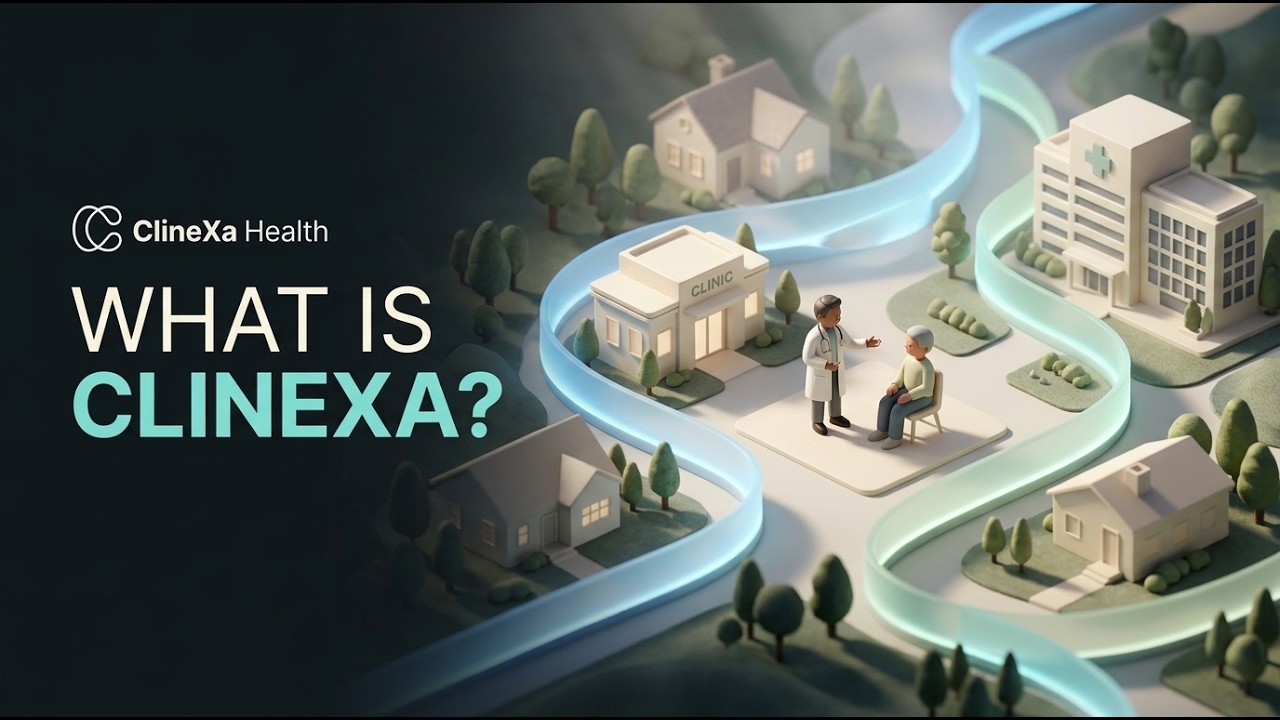
What is Clinexa?
Founder Dr. Ahmed Messaoudi introduces the clinical intelligence OS uniting patient records, AI, and healthcare workflows.
Doctors use AI every day.But AI doesn't know their patients.
Clinexa gives every patient a record that grows with each visit, so the AI always has the right context, at the right moment.
AI starts from zero.
A doctor asks an AI tool about a patient. It knows nothing: not their history, not their last visit, not what was decided.
So everything gets repeated.
Next visit, same story. History is typed again, documents are pasted again, and what was said last time is lost.
Every consultation is kept.
Each visit is recorded and turned into its own context: notes, documents, prescriptions, results. All of it joins one patient record, in order, and keeps growing.
Now AI knows the whole story.
Whenever the doctor needs it, they can ask a question, get a summary or generate a document. The AI answers from this patient's own record. The doctor reviews and validates.
Get answers from this patient's own record.
Draft notes, prescriptions and letters from context.
Turn each consultation into its own structured context.
Keep one organized record that grows over time.
Same AI.Different outcome.The difference is context.
Clinexa Health is the infrastructure that builds that context: one patient, one connected journey, one clinical workflow.
Medicine Runs On
Disconnected Systems
Scheduling, notes, records, diagnostics, billing.
Everywhere data is duplicated.
Complexity increases.
Time with patients decreases.
The Structural Shift.
From Silos to Infrastructure.
Healthcare has spent decades digitizing medicine, creating isolated software silos. Applications solve single workflows; ClineXa connects every workflow into one coherent substrate.
One Foundation.
Three Intelligent Layers.
Patient Space
Intelligent pre-arrival intake, asynchronous symptom capture, and seamless communication.
Doctor Space
A high-performance command center for the physician. Palantir-level density. Zero clutter.
AI Copilot
Ambient clinical intelligence running silently in the background, drafting notes and structuring data.
Care Begins Before The Visit
Patients describe their symptoms before the visit begins. The AI conducts a structured clinical intake, builds a pre-diagnosis document, and routes the appointment request directly to the physician — fully briefed, fully prepared.
The Patient Arrives Prepared.
The Physician Arrives Informed.The Consultation Can Finally Begin.
For too long, the first fifteen minutes of a consultation have been spent gathering information that the patient already had — symptoms, history, context — reconstructed in real time because no system existed to capture it in advance. The Patient Space ends that. It transforms the time before the appointment into a clinical asset.
Conversational AI Intake
The Patient Space opens with a conversation — not a form. A clinically rigorous AI engages the patient with an open question and progressively explores every dimension of their complaint: onset and duration, location and character, severity and pattern, what makes it worse and what makes it better, what else is happening alongside it.
The AI listens the way a careful physician listens — following the thread, asking the right next question, building a complete clinical picture one exchange at a time. Patients can respond in free text, in their own words, at their own pace. They can upload images — photographs of skin conditions, scan results, medication labels, anything visually relevant. The AI incorporates it all.
By the time the intake is complete, the patient's complaint is not a vague description. It is a structured clinical narrative.
AI-Generated Pre-Diagnosis (Doctor-Only)
When the intake conversation closes, the AI automatically generates a structured clinical pre-diagnosis brief — a probabilistic differential diagnosis ranked by likelihood, symptom summary, urgency indicators, and clinical rationale.
Security by Design: This intake exists for one purpose only — to prepare the doctor, not to inform or diagnose the patient. The AI never shows the patient a diagnosis, a probability, or an urgency assessment. The pre-diagnosis is sent exclusively to the physician alongside the appointment request. The patient simply receives confirmation that their request was submitted; clinical interpretation stays entirely in physician hands.
One-Action Appointment Request
With a single action, the patient submits an appointment request. It arrives at the physician's queue bundled with the complete pre-diagnosis document, the full intake transcript, and any materials the patient has uploaded. The physician confirms — and in that one action, the ecosystem activates: a clinical session is opened, the AI begins its analysis, and the patient receives an instant confirmation.
Permanent Personal Health Archive
Every document associated with a patient's care lives in their own secure, permanent archive — prior records they upload, imaging results, specialist letters, and every document their physician generates: prescriptions, consultation notes, referral letters, lab orders. All of it flows automatically between the physician's system and the patient's space. Nothing is ever lost between a clinic and a patient's phone again.
The physician's command center
Every patient record, appointment, clinical document, and diagnostic session lives in one continuously available interface — organized automatically, accessible from anywhere, searchable in seconds. No re-entry. No re-uploading. No fragmentation.
Next Appointments 4
Recent Appointments
Quick Action Center
Appointment Requests
Every Patient. Every Record.
Every Document. Every Appointment.One Interface. Always Complete.
The ClineXa Dashboard is not an electronic health record. EHRs were built for billing compliance in an era before AI, before real-time data, before the possibility of a system that could organize itself. The Doctor Space was built for something entirely different: to give physicians a unified command center where clinical practice runs without friction, without fragmentation, and without the administrative overhead that has come to define modern medicine.
Longitudinal Patient Profiles
Every patient in a physician's practice has a complete, searchable, continuously evolving record — organized across four dimensions: their full consultation history including recordings, transcripts, and every AI-generated document; their medical summary covering vitals, allergies, current medications, surgical history, family history, and insurance; their complete document portfolio; and the physician's own clinical notes.
The record is created automatically the moment a patient submits their first intake. It grows automatically after every consultation. It is always complete, always current, and always one search away.
Unified Schedule Management
One view of the entire practice calendar — past consultations and upcoming appointments, blocked time and recurring schedules, pending requests and confirmed visits. Past consultations are preserved completely: the audio recording, the verbatim transcript, the clinical brief, and every document generated. Upcoming consultations surface the patient's pre-diagnosis document in advance.
The physician walks into every consultation fully briefed. Not because they found time to review everything beforehand — because the system put everything in front of them before they had to ask.
Intelligent Appointment Queue
Every appointment request submitted through the Patient Space arrives at the physician's queue with its full context: the pre-diagnosis document, the AI intake conversation, the patient's history, and an AI risk assessment. Accepting a request does not just schedule an appointment. It creates the consultation record, links the patient's history, activates the Copilot session, and notifies the patient — all in one action.
Smart Consultation Transcription
Not every consultation needs a full AI clinical session. Sometimes a physician simply needs to capture what happened — accurately, completely, and without interruption — and have it structured and stored the moment the appointment ends.
ClineXa's Smart Consultation Transcription makes that possible with a single action.
The physician records the consultation directly within the dashboard. When the recording ends, the transcription engine activates automatically in the background — converting the full audio into a verbatim, medically precise transcript without the physician waiting, without the physician typing, and without the physician stopping their workflow for a single moment.
The transcription is not a rough voice-to-text output. It is a clinically rigorous document — speakers identified by their clinical role, medical terminology transcribed with precision, clinically relevant non-verbal sounds captured, and any inaudible sections flagged with timestamps so nothing is falsely represented as heard. Every word spoken in the consultation is accounted for.
When transcription completes, the physician is notified instantly. The full transcript is stored permanently on the consultation record, linked to the patient's profile, and available for review, download, or future reference from the same dashboard — alongside every other document associated with that patient and that visit.
And crucially: the transcript does not disappear after one use. It becomes the permanent, searchable record of that encounter — and the foundation for the consultation's context memory block, which is automatically generated and stored for injection into every future consultation for this patient.
The physician who recorded a ten-minute follow-up visit and chose not to open the Copilot that day still contributes to the patient's longitudinal clinical picture. The memory of what was discussed, what was observed, and what was decided is captured, structured, and retained — automatically, without additional steps.
For consultations that need intelligence: the AI Copilot. For consultations that need precision capture: Smart Transcription. For every consultation: the patient's record grows richer, and the next visit begins more informed than this one.
Unified Document Vault
Every document associated with every patient — uploaded by the patient, generated by the AI, issued by the physician — lives in one searchable, filterable vault. Consultation notes, prescriptions, referral letters, lab orders, imaging files, DICOM scans, and patient-uploaded records are all automatically categorized, tagged, and linked to the correct consultation. The physician never manually organizes a document. They simply access what they need, when they need it.
Intelligence At The Point Of Care
Real-time Synthesis
Acoustic & Semantic Analysis
Diagnostic Cross-Referencing
Safety Netting Check
Drafting Integrated Plan
Active Intelligence Streams
Consultation_Audio_Stream
LIVE • PROCESSING
Visual_Context_Sync
PENDING
Vitals_Telemetry_Integration
WAITING
Probabilistic Diagnosis Mapping
Live Copilot Insights
A Physician Should Never Enter a
Consultation Underprepared.
With ClineXa, They Never Will.
The AI Copilot is the most advanced layer of the ClineXa ecosystem — and the one that most directly changes what it feels like to practice medicine. It is not a chatbot layered onto an existing workflow. It is a purpose-built clinical reasoning engine that activates automatically, reasons continuously, and produces complete clinical output from every consultation — without the physician ever stopping to type.
The engine at its core was benchmarked at 98.5% on the United States Medical Licensing Examination in 2024. That number is not a feature. It is a measurement of diagnostic reliability under the most rigorous standardized clinical conditions available.
Automatic Activation
The moment an appointment is confirmed, the Copilot session opens. The AI immediately begins analyzing the patient's pre-diagnosis document and intake history. It does not wait to be asked. By the time the physician opens the dashboard, the initial analysis is already in progress — and the clinical brief is taking shape.
The physician's preparation time: zero. The Copilot's preparation time: started the moment the appointment was confirmed.
The Clinical Brief
Before the physician says a word to the patient, a complete clinical brief is waiting for them:
Ranked differential diagnoses — evidence-weighted, probability-assessed, with supporting clinical rationale and ICD codes for each. Confirmatory next steps — the targeted examinations, laboratory investigations, and imaging studies most likely to resolve diagnostic uncertainty. An interim management plan — appropriate clinical actions available before formal diagnosis is confirmed. A clinical alerts panel — red flags, emergency indicators, and critical findings surfaced by urgency, impossible to miss. A structured follow-up plan — review timelines, escalation criteria, and monitoring parameters for the most likely diagnoses.
The physician walks in knowing the landscape. The consultation becomes a confirmation and a conversation — not an investigation starting from zero.
Real-Time Clinical Dialogue
During the consultation, the physician converses with the Copilot in real time — sharing observations, asking questions, refining the clinical picture. The AI maintains full context: the patient's history, the intake conversation, the current clinical brief, and the structured memory of every previous consultation this patient has had.
Physicians can share images, attach lab results, and reference patient-uploaded documents directly in the clinical dialogue. The AI analyzes everything — multimodal, real-time, always contextually complete.
As the conversation develops, the clinical dashboard updates automatically — diagnosis probabilities shifting as new information emerges, alerts appearing as new findings surface, treatment cards refining as the clinical picture sharpens. The physician's clinical view reflects the actual clinical reality, at every moment of the consultation.
Diagnosis Confirmation & Treatment Strategy
When the physician confirms the diagnosis, the Copilot generates an in-depth, tailored treatment strategy — not a generic protocol, but a specific plan built from the patient's confirmed diagnosis, their history, their medications, their comorbidities, and the clinical conversation that just took place.
The strategy covers the complete treatment landscape: pharmacological options with specific agents, dosing protocols, titration schedules, drug interaction flags, and monitoring parameters. Non-pharmacological interventions — lifestyle modifications, physiotherapy, dietary recommendations, behavioral changes. Referral classification — which specialty, what urgency, what specific clinical questions to ask. Patient education — clear, accessible explanations of the diagnosis and what the treatment involves. A defined follow-up schedule — when to return, what to monitor, what symptoms should prompt earlier contact.
Complete Documentation Suite
With a single action, the Copilot generates the complete clinical documentation package for the consultation — every document that would otherwise take an hour of post-consultation typing:
SOAP Note — Structured subjective, objective, assessment, and plan documentation, professionally formatted with the physician's credentials, the patient's demographics, ICD codes, and a complete clinical narrative of the encounter.
Prescription — Itemized medication list with specific dosage instructions, administration route, dispensing details, refill information, and a sequentially generated Rx number — formatted to the standards required for pharmacy dispensing.
Lab Order — Ordered investigations with clinical indications, specimen requirements, priority classification, and specific instructions for the laboratory — formatted as a proper clinical order.
Referral Letter — A professionally structured specialty referral with complete clinical summary, the patient's current medications, relevant history, and the specific clinical questions the receiving specialist needs to address.
Every document is reviewed by the physician, amended where needed, and finalized before it goes anywhere. The AI drafts with clinical precision. The physician approves with clinical authority. That sequence is never reversed.
Longitudinal Memory
When the consultation closes, the AI generates a structured memory of the encounter — clinically focused, precisely compressed, ready for automatic injection into every future consultation for this patient. Previous diagnoses. Prescribed treatments. Reported outcomes. Unresolved clinical questions. Recommended follow-ups that were or were not completed.
The next time this patient appears, the Copilot already knows their story. Not because someone updated a field in a database — because the system captured it automatically, structured it intelligently, and retained it permanently.
Every return visit becomes more informed than the last. The physician never starts from zero with a patient they have seen before. The AI remembers everything — so the physician can focus entirely on what is in front of them today.
The examination that determines whether a physician is qualified to practice medicine in the United States. The same diagnostic benchmark. Applied to the engine powering every ClineXa consultation.
This is not a statistic chosen for its impressiveness. It is the most rigorous standardized clinical measurement available — and it is the standard we hold ourselves to.
Every output is a draft for clinical review — not an autonomous clinical action.
This is not a disclaimer. It is the architecture.
Clinical authority never leaves the physician's hands. It is amplified. Never replaced.
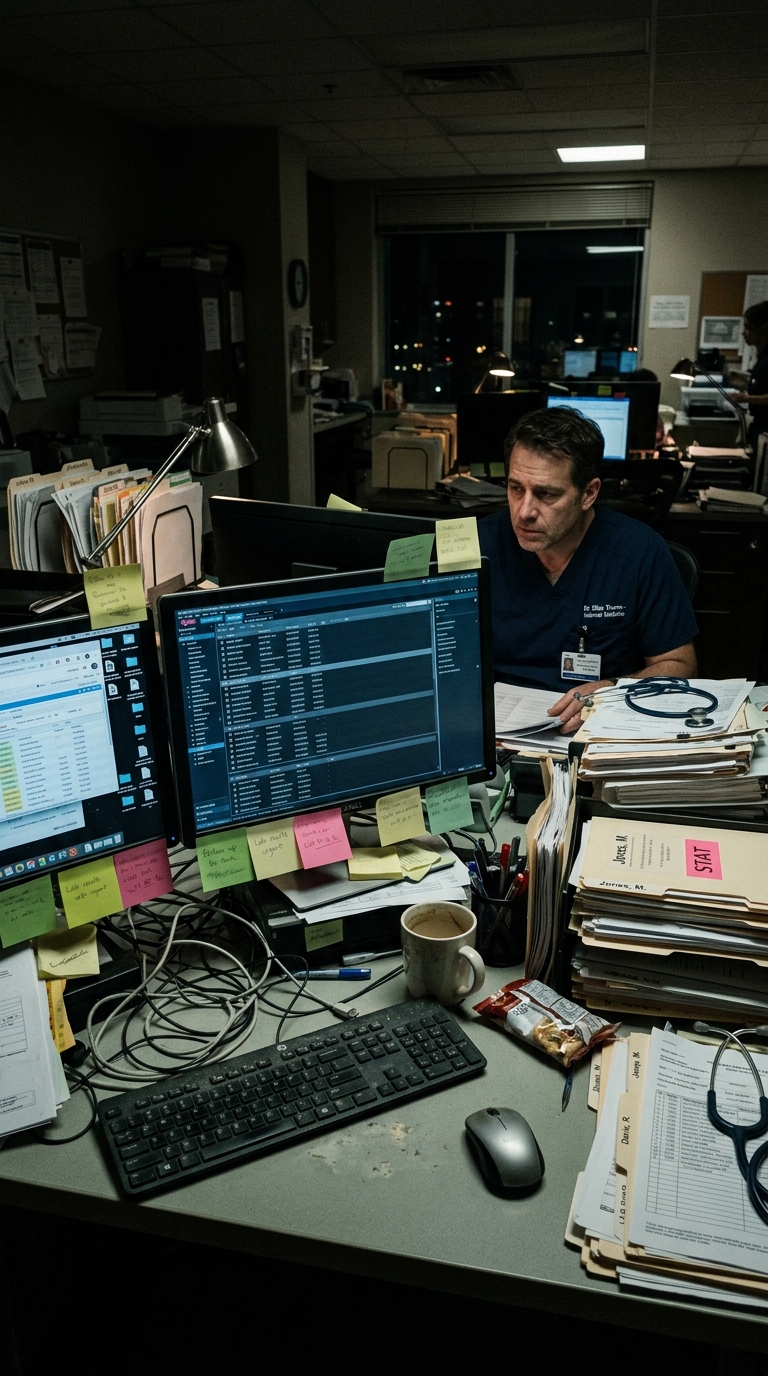

You became a doctor to think, diagnose, and heal.
Every morning begins with patients you know almost nothing about. You ask the same routine questions, dig through disconnected records, make critical clinical decisions — then spend hours documenting them.
ClineXa changes what that morning looks like.
By the time you open your dashboard, every patient has already been interviewed. Their symptoms are structured. The differential is drafted. The critical findings are highlighted.
You enter every consultation already briefed — the way a senior consultant reviews a case with a complete resident workup in hand.
Your Copilot listens quietly, confirms your diagnosis, and prepares your SOAP notes, prescription drafts, and referral letters — while you stay fully engaged with the patient.
Everything is reviewed, confirmed, and filed automatically. No charts follow you home, and no documentation backlog accumulates on your desk.
ClineXa Health doesn't replace your clinical judgment.It removes everything that used to compete with it.
The Open Healthcare Layer
ClineXa is designed to become the trusted infrastructure where approved healthcare innovations connect. Every tool plugs directly into the physician's workflow on the same platform where patient data already lives.
Laboratories
Imaging Centers
Radiology AI
Pathology AI
Dermatology AI
ECG Analysis
Pharmacy Systems
Insurance Providers
Gov. Health Services
Billing & Payments
Telemedicine
Wearables
Home Monitoring
Clinical Trials
Research Platforms
Future AI Systems
Clinical Context is the Fuel
Data alone has limited value. Patient consultations produce structured data, creating continuous patient records that feed rich clinical context. Better context yields better AI assistance, driving better clinical decisions across connected organizations.
Built For Real Medicine
We measure our systems against the same standards used to evaluate physicians. No hype. Just rigorous, peer-reviewed clinical reliability.
Workflow Pain Points Solved
Evaluated across real clinical workflows. Doctors report starting visits with richer context, zero repeated questioning, and automated SOAP documentation.
Three Years of Engineering & Clinical Validation
Years of architecture, engineering, and clinical feedback are converging into one intelligent platform. We are transitioning from product development to clinical validation and scalable deployment.
Architecture & Vision
- Infrastructure architecture designed
- Clinical workflow research with physicians
- Core unified platform vision established
Core Platform Completed
- Patient Space intelligent intake engine
- Doctor Space clinical command dashboard
- AI Copilot real-time reasoning layer
- Clinical Data Engine architecture
Operational MVP
- Clinical Documentation Engine operational
- USMLE 98.5% benchmark validated
- Multi-model AI architecture live
- Unified clinical infrastructure operational
Scaling & Clinical Validation
- Pilot testing across 3 active clinics
- 95% workflow pain points addressed
- Continuous physician feedback & product refinement
- Strategic partnerships & preparing larger deployments
Expansion & Ecosystem
- Enterprise & hospital deployments
- Secure telemedicine video layer
- Integrated practice payment infrastructure
- Global Open AI integration marketplace
Trust by Architecture. Not Promises.
Healthcare security cannot be an afterthought or a policy document. It is mathematically built into our data pipeline, identity architecture, and infrastructure layers.
Data Ownership Guarantee
Healthcare providers and patients retain complete, unalienable ownership of their data. ClineXa provides the secure infrastructure to govern and process it.
Zero AI Model Training
Patient data is never used to train public AI models by default. Your clinical conversations and medical notes remain strictly within your clinical enclave.
Encryption Everywhere
End-to-end encryption in transit (TLS 1.3) and at rest (AES-256) across every database, transcript, and generated document in the ecosystem.
Role-Based Access & Auth
Multi-factor authentication, granular role-based access controls (RBAC), and session verification ensuring only authorized clinical staff access records.
Audit Logging & Org Isolation
Comprehensive, tamper-proof audit trails for every record access, along with logical and physical organization-level data isolation.
Flexible Deployment
Engineered to support Cloud, Hybrid, and On-Premise hospital deployments according to institutional compliance and data residency requirements.
Vendor-Independent AI
Multi-model AI architecture that insulates your practice from model lock-in, routing clinical queries to approved, verified medical models.
EHR Coexistence
ClineXa does not force you to rip-and-replace existing EHRs. It acts as the intelligent infrastructure layer unifying workflows around them.
Built at the Intersection of Clinical Practice & Systems Engineering
Together, we combine clinical expertise, software architecture, systems engineering, and AI to build the next generation of healthcare infrastructure.
Dr. Ahmed Messaoudi
Clinical AI Infrastructure Engineer
- Dentist & AI Product Builder
- Founder of FuturaSmile
- Architect of the ClineXa Platform & Vision
- Clinical AI Infrastructure & Workflow Designer
Physician Advisory Lead
Clinical Expertise & Patient Safety
- Clinical Practice Expertise
- Healthcare Workflow Validation
- Clinical Safety & Product Guidance
- Standardized Care Benchmarking
Hardware & Systems Lead
Infrastructure & Systems Architecture
- Systems Engineering
- Infrastructure & Hardware Integration
- Scalable Technical Architecture
- Real-time Signal & Telemetry Systems
Architecture & AI Lead
Cloud Infrastructure & Medical AI
- Software Architecture & Backend Systems
- Cloud Infrastructure & Integration Technologies
- Artificial Intelligence Systems
- Multimodal Diagnostic Pipelines
We Are Building the Operating System for Modern Medicine.
The Foundation Is Already Here.
ClineXa Health is early. The infrastructure is built. The clinical validation is established. The ecosystem is live. What comes next is not iteration on existing features — it is expansion into the adjacent layers that will make ClineXa the irreplaceable center of every physician's practice, and eventually, the infrastructure layer beneath the entire healthcare technology industry.
Integrated Payment Infrastructure
The financial layer of medical practice is as fragmented as the clinical one. Billing platforms, payment processors, insurance documentation, and financial reporting — all separate tools, all requiring manual coordination, all representing administrative overhead that consumes time with no clinical return.
ClineXa will embed a complete payment infrastructure directly into the clinical workflow — patient billing, secure transaction processing, insurance documentation, and financial reporting, all inside the same system where the care was delivered. The physician completes the consultation, finalizes the documents, and closes the financial record — without opening a second platform.
A practice where clinical and financial workflows are one continuous motion.
Secure Telemedicine
Remote care should be indistinguishable from in-person care in terms of clinical richness. A video consultation should produce the same clinical brief, the same AI reasoning support, the same documentation suite, and the same longitudinal memory as one that happens in a clinic.
ClineXa's telemedicine layer will deliver end-to-end encrypted video consultations fully integrated with the patient record and the AI Copilot session — so that distance becomes a logistical detail, not a clinical limitation.
A platform where the quality of clinical care is independent of physical location.
Comprehensive Documentation Ecosystem
Clinical documentation is only one dimension of the paperwork that defines medical practice. Insurance forms, regulatory compliance submissions, administrative correspondence, billing documentation — each one represents hours every week that physicians spend not practicing medicine.
ClineXa will expand its document generation engine to cover the full administrative surface of medical practice — so that every document a physician's practice generates, clinical or administrative, is produced inside one coherent system, from one source of truth, without manual drafting.
A practice that produces every document it needs without a physician typing a word of any of them.
Global Medical API Integration
The most architecturally ambitious milestone on the ClineXa roadmap: transforming the AI Copilot into a central clinical intelligence hub connected to international medical imaging platforms, radiology analysis systems, genomic databases, specialized diagnostic engines, and advanced decision-support tools — creating a single interface where multiple specialized AI systems collaborate, and where the physician receives a unified, synthesized clinical view rather than outputs from six separate systems they have to interpret in parallel.
The physician as conductor of a global orchestra of specialized clinical intelligence — with every instrument audible through one interface.
A Unified Intelligent Clinical Environment
The long-term objective for ClineXa Health is a state that does not yet exist anywhere in healthcare technology: a fully integrated clinical environment where data flows without barriers between every module, AI continuously deepens its understanding of every patient and every practice, and every tool a physician needs — from first intake to final follow-up, from clinical reasoning to billing — lives inside one interface that grows more intelligent with every consultation it processes.
Not a better EHR. Not a smarter scheduling tool. Not a more accurate diagnostic aid. The infrastructure beneath all of them — the layer that every other healthcare technology eventually builds on top of.
ClineXa Health as the operating system of modern medicine.
This is how infrastructure compounds. And ClineXa is building it in the largest, most consequential, most structurally underserved industry in the world.
Healthcare technology solved isolated tasks.
Nobody solved systemic fragmentation.
For decades, software vendors built point solutions: one application for intake, another for notes, a third for billing, a fourth for telemedicine.
The burden of integration fell on clinicians. Doctors became human routers — copying, re-entering, and reconciling information across disconnected screens while precious time with patients vanished.
ClineXa Health exists to unify medicine.
Not to replace physicians. Not to automate care away. But to amplify human expertise through intelligent, seamlessly connected clinical infrastructure.
Frequently Asked Questions
Key insights regarding governance, data privacy, EHR integration, and our clinical infrastructure paradigm.